- All
- Product Name
- Product Keyword
- Product Model
- Product Summary
- Product Description
- Multi Field Search
English

Views: 0 Author: Site Editor Publish Time: 2026-06-19 Origin: Site
System design carries incredibly high stakes. Efficiency dictates system heat loads and directly influences prime mover sizing. It goes far beyond a simple vanity metric. You simply cannot ignore it if you want reliable equipment. While one specific motor design dominates theoretical efficiency charts, matching it incorrectly causes catastrophic failure. You might also bloat your project budget unnecessarily. Forcing the "most efficient" unit into the wrong application rarely works out well in the field.
Every decision requires careful balance. This guide breaks down true engineering baselines regarding hydraulic motor efficiency. We compare the top contenders head-to-head based on actual data. You will learn a clear framework to balance peak performance against real-world constraints. We will help you navigate fluid contamination levels, torque demands, and strict budgetary limits effectively.
The Efficiency Champion: Piston motors (specifically radial piston designs) achieve the highest overall efficiency, often peaking between 85% and 95%.
The Efficiency Equation: True motor efficiency is a product of Volumetric Efficiency (internal leakage) and Mechanical Efficiency (friction and fluid shear).
The Trade-Off: High-efficiency piston motors demand pristine fluid conditions (strict ISO cleanliness) and carry a higher upfront cost compared to rugged, lower-efficiency gear motors.
The Hidden Cost of Inefficiency: Energy lost to inefficiency converts directly into heat, requiring larger, more expensive heat exchangers.
You cannot improve what you do not measure. We must establish a strict engineering baseline before ranking different motor types. True efficiency breaks down into two distinct categories. They interact to determine how much power actually reaches your driven load.
Volumetric efficiency measures the extent of internal leakage. No hydraulic motor operates at 100% volumetric efficiency. Engineers intentionally design controlled internal leakage into high-performance motors. This "case drain" flow lubricates internal bearings and pulls heat away from critical components.
Waning volumetric efficiency quickly manifests in the field. You will notice slower cycle times. The motor will also show diminished speed under heavy loads. Fluid slips past worn seals instead of doing useful work.
Mechanical efficiency measures power losses from two main sources. First, we look at mechanical friction from bearings and seals. Second, we factor in fluid shear resistance. Pumping thick oil through tight clearances requires energy.
Poor mechanical efficiency directly limits your output torque. You will see lower actual torque than you theoretically calculated. This issue becomes extremely prominent during equipment startup. Breakaway torque demands extra energy to overcome static friction.
Overall efficiency is simply the product of volumetric and mechanical efficiency. If your motor has 90% volumetric efficiency and 90% mechanical efficiency, your overall efficiency sits at 81%. This metric dictates your actual energy consumption.
Low efficiency fundamentally changes your cooling system requirements. It also drives up continuous energy costs. Consider a standard gear motor running at 85% efficiency. It will generate significantly more heat under load compared to a piston motor at 92% efficiency. A gear motor might produce 5.5 kW of heat loss. The piston motor might only produce 2.7 kW. You must size your heat exchangers to handle this difference.
Metric | Formula / Definition | Primary Field Symptom of Loss |
|---|---|---|
Volumetric Efficiency (ηv) | Actual Speed ÷ Theoretical Speed | Slower cycle times, speed drops under load |
Mechanical Efficiency (ηm) | Actual Torque ÷ Theoretical Torque | Lower output torque, stalling at startup |
Overall Efficiency (ηo) | ηv × ηm | Excessive system heat generation |
Different applications demand different compromises. Let us categorize the primary motor types. We will examine their baseline expectations transparently. This data helps you match the component to the machine properly.
Piston motors dominate the high-efficiency landscape. They tolerate extremely high pressures. They also offer the best overall energy conversion rates.
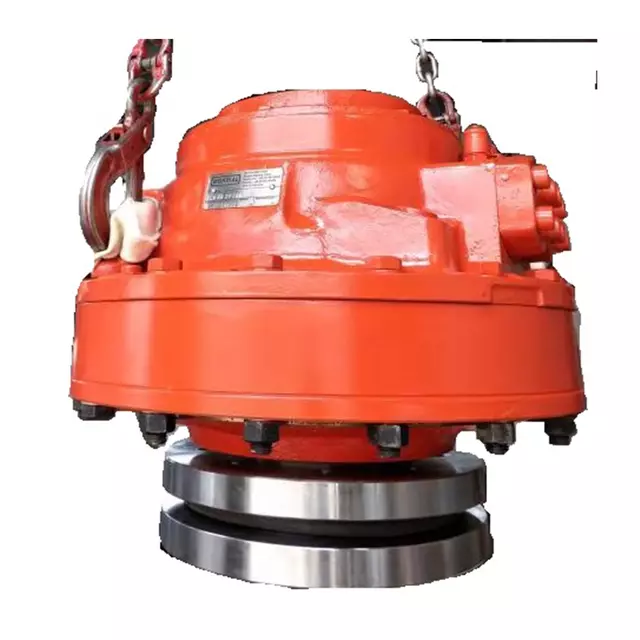
Radial Piston: This is the absolute champion for Low-Speed, High-Torque (LSHT) applications. They routinely achieve efficiencies up to 95%. They provide excellent starting torque. Low-speed mechanical loss remains minimal.
Axial Piston: These units typically range from 85% to 92% overall efficiency. They stand as the optimal choice for medium-to-high speed continuous operation. You see them heavily used in closed-loop hydrostatic drives.
Vane motors strike a unique balance between performance and cost. They feature internal vanes extending outward to maintain good sealing against the cam ring. This design preserves efficiency even as wear occurs over time. However, they remain highly sensitive to fluid contaminants. Engineers favor them for their exceptionally low noise levels in precision applications.
Gear motors are simple and highly cost-effective. They demonstrate incredible tolerance to abrasive wear and poor fluid conditions. You can install them in dirty environments confidently. However, their inherent design clearances result in higher volumetric losses. They simply leak more fluid internally than piston designs.
These compact units offer excellent solutions for low-speed environments.
Gerotor: These are compact and very cost-effective. However, they suffer notable mechanical friction at lower speeds. This drops their mechanical efficiency.
Geroler: These integrate roller elements into the gear set. The rollers dramatically reduce mechanical friction. This upgrade significantly improves starting torque and low-speed efficiency compared to standard gerotors.
Lab conditions rarely mimic dirty job sites. Engineers test motors using perfect fluid at optimal temperatures. You will face implementation realities and operational risks. Several factors destroy efficiency in the real world.
Operating outside optimal fluid viscosity ruins efficiency regardless of your chosen motor type. You must maintain proper fluid temperature.
Too Thick: Cold or overly viscous fluid increases fluid shear resistance. This plummets your mechanical efficiency. The motor fights the fluid itself.
Too Thin: Overheated or excessively thin fluid fails to seal internal clearances. This drastically reduces your volumetric efficiency. Excessive internal leakage wastes pump flow.
Variable displacement motors introduce a hidden efficiency trap. When operating at partial displacement, internal leakage paths behave like constant orifices. The size of the leak remains the same, but the total flow drops. This causes a disproportionate drop in volumetric efficiency at partial loads. You lose a larger percentage of your working fluid to the case drain.
Normal operation inevitably degrades internal components. Abrasive wear slowly widens internal clearances. This gradually kills your volumetric efficiency. Simultaneously, bearing degradation introduces mechanical drag. This kills your mechanical efficiency. You must monitor cycle times closely to catch this degradation early.
Monitor case drain flow monthly. Sudden increases indicate seal failure.
Implement strict fluid analysis programs. Catch metal particulates early.
Install properly sized heat exchangers to maintain stable fluid viscosity.
Choosing the right hydraulic motor involves more than reading efficiency charts. Buyers and engineers must evaluate system-level constraints. You need a practical framework to make the best decision.
Piston motors require highly sophisticated filtration. You must maintain their tight internal tolerances. If your operating environment cannot guarantee fluid cleanliness, change your strategy. Dirty agricultural or mining sites destroy piston motors quickly. A lower-efficiency gear motor offers much better reliability and operational stability in these harsh environments.
You must evaluate three distinct torque phases. First, look at Breakaway Torque. This is the force required to overcome static friction. Second, evaluate Starting Torque under load. Finally, assess Running Torque. Radial piston and Geroler motors excel wildly when high breakaway torque remains critical for your machine.
Continuous-duty applications easily justify the higher upfront cost of an axial piston motor. You recover the investment through daily energy savings and reduced cooling demands. Conversely, intermittent-duty applications rarely require peak efficiency. Equipment like clamps or utility winches runs infrequently. They are often better served by gear or vane motors. The slight energy penalty remains negligible over the machine's life.
Hydraulic power offers unique physical advantages. These motors offer an exceptionally low moment of inertia compared to electric motors. They typically weigh 10% as much and take up 25% of the volume for equivalent power output. This makes them universally superior for applications requiring instant reversal. This physical advantage remains true regardless of the specific motor type you choose.
You need an actionable path forward. Upgrading or specifying components requires systematic thinking. Follow these logical steps to ensure a successful procurement cycle.
Step 1: Map the Envelope. Define the absolute maximums for flow (GPM/LPM) and pressure (PSI/Bar). Clearly establish your desired speed range (RPM) under full load.
Step 2: Audit Fluid Infrastructure. Assess your current or planned filtration capabilities. Evaluate your cooling capacities honestly. Do this before shortlisting a sensitive piston motor.
Step 3: Evaluate Energy Consumption. Weigh the upfront component cost against your projected 5-year power consumption. Factor in scheduled maintenance intervals. Choose the model that balances initial outlay with daily operating efficiency.
Step 4: Consult for Customization. Engage directly with a fluid power engineer. Finalize your shaft types and mounting flanges. Clarify specific case drain plumbing requirements to ensure bearing longevity.
Common Mistakes During Procurement:
Ignoring the case drain line requirements on high-efficiency motors.
Assuming a variable displacement motor maintains 90% efficiency at 10% stroke.
Sizing the motor solely on running torque while ignoring breakaway friction.
Radial and axial piston motors clearly win the title of "most efficient" on paper. However, paper specs do not move dirt or run assembly lines. Your true goal involves matching the motor's tolerance, upfront cost, and torque curve to the machine's specific duty cycle.
You must look at the entire circuit holistically. Upgrading a motor for better efficiency only yields positive results if you optimize the surrounding environment. Your hydraulic fluid viscosity, filtration strategy, and pump delivery must work in tandem. Evaluate your operating conditions honestly, select the appropriate motor architecture, and prioritize system cleanliness to lock in long-term performance.
A: Controlled internal leakage is physically required to lubricate internal bearings and carry away heat. Without this intentional leakage, the motor would quickly seize. Additionally, mechanical friction from seals, bearings, and fluid shear resistance can never be entirely eliminated in the physical world.
A: Geroler motors have added cylindrical rollers integrated into the gear set. This design replaces sliding friction with rolling friction. It significantly reduces mechanical drag, increases startup torque, and improves overall low-speed efficiency compared to standard Gerotors.
A: Look for four key warning signs. Increased cycle times point to volumetric loss. You will also see excessive case drain flow. Unusually high fluid temperatures indicate severe energy waste. Finally, the motor might stall under normal loads due to declining mechanical efficiency.
A: Yes. Mechanical efficiency often drops at very low speeds due to breakaway friction. Volumetric efficiency also suffers because leakage represents a much higher percentage of the total reduced flow. This is precisely why LSHT radial motors are specifically designed to handle these exact conditions.